
Patient and Care Partners’ Perspectives on Engagement
Article full title: Exploring patient and caregiver perceptions of the meaning of the patient partner role: a qualitative study
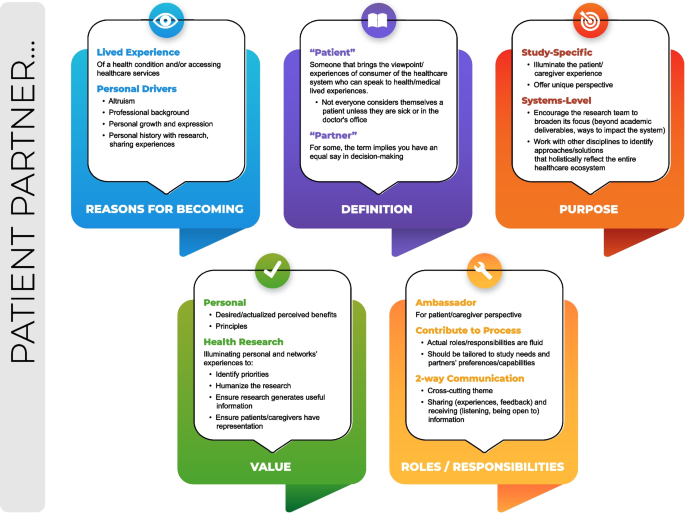
Study aims: To explore patient partners’ motivations for engagement and understanding of their role.
What we did: We interviewed 13 patient partners about their motivations for engagement and understanding of their roles. Themes were generated from the interview response to meet the study aims.
What we found: Sharing the lived patient and caregiver experience was central to how most patient partners defined their role and its purpose, value, and responsibilities. We also identified four other categories of motivations for becoming a patient partner and other contributions that patient partners make to research. Finally, interviews highlighted different types of meanings that could be attached to the title of “patient partner.” Based on our findings, it is very important that academic researchers and patient partners take the time to discuss and understand each other’s underlying motivations for partnering and their thoughts on the purpose, value, and responsibilities of the patient partner role.
Future Directions for Patient Engagement
Article full title: Future directions for patient engagement in research: a participatory workshop with Canadian patient partners and academic researchers
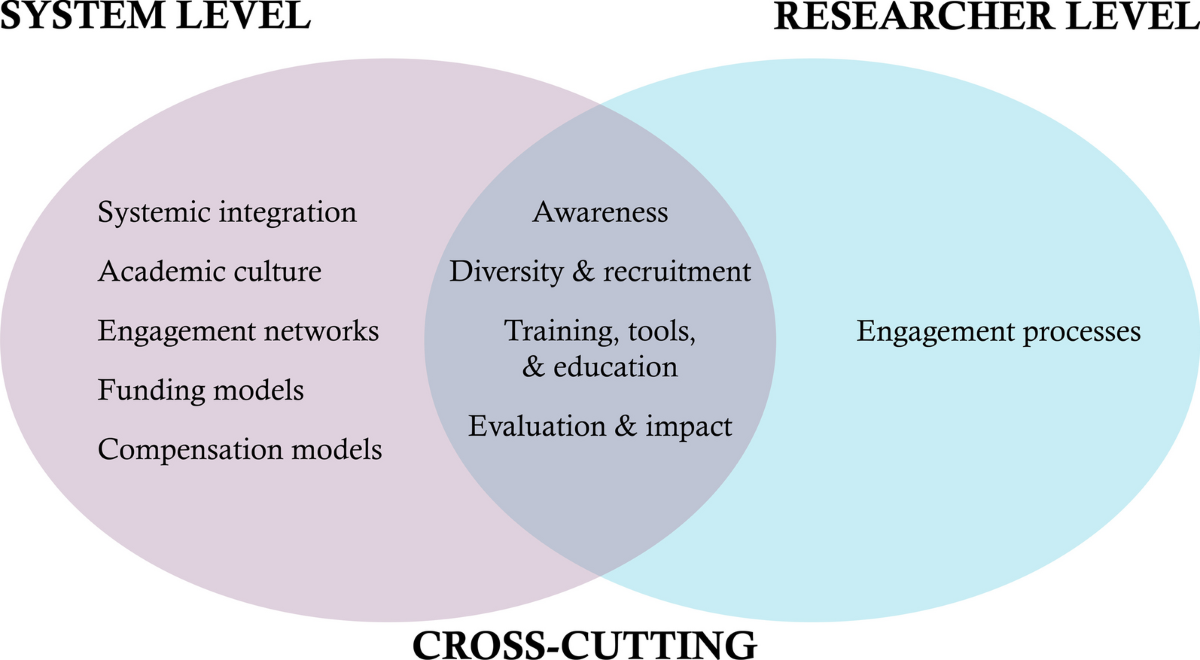
Study aims: To identify future directions for Canadian patient engagement in research and discusses its findings in the context of the international literature.
What we did: A multi-meeting pan-Canadian virtual workshop. Thirty participants attended four, 1.5–3h virtual meetings. Participants discussed the current and preferred future states of Canadian patient engagement in research. Themes were generated from conversations that occurred in the workshop.
What we found: 10 target areas for improving Canadian patient engagement in research (systemic integration; academic culture; engagement networks; funding models; compensation models; engagement processes; awareness; diversity and recruitment; training, tools and education; evaluation and impact).
Patient Engagement in Pharmacy Research
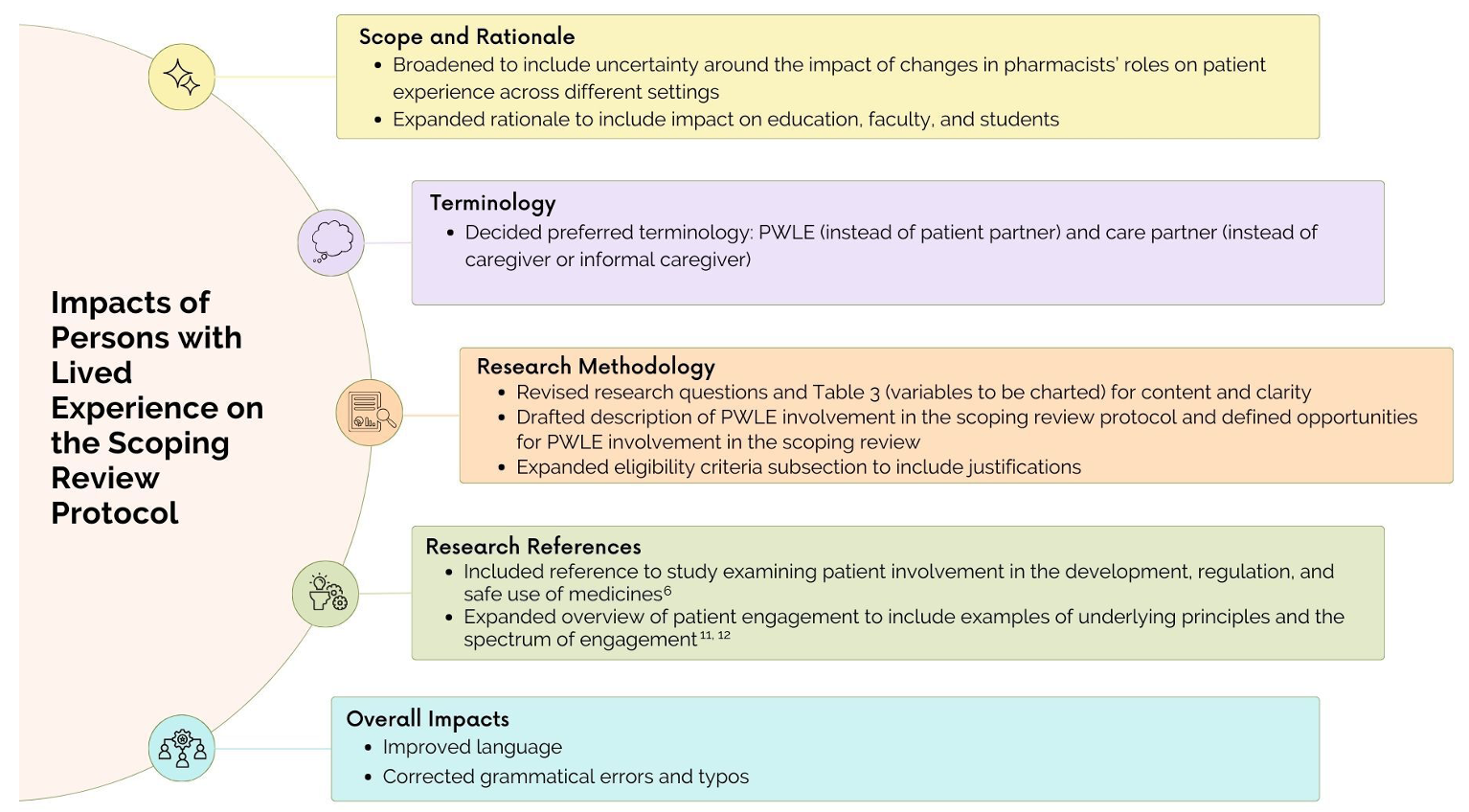
Article full title: Protocol for a scoping review of patient engagement in pharmacy practice research
Study aims: This study presents our plan for a large, structured review of published and unpublished research to better understand how patient engagement is being used in pharmacy practice research. The review will examine how patients are engaged throughout different stages of research, how engagement is described in research studies, and how researchers assess the quality and impact of engagement.
What we did: This paper describes the plan for the review rather than completed research findings.This review will provide a clearer picture of how patients and caregivers are being engaged as partners in pharmacy practice research. This includes identifying relevant studies, collecting key information from them, and examining how patients are engaged throughout different stages of the research process, such as study design, conducting the research, and evaluating findings.
Expected contribution: This review will provide a clearer picture of how patients and caregivers are being engaged in pharmacy practice research. It will also help identify gaps and inconsistencies in how engagement is described and evaluated across studies, which may help guide future efforts to strengthen meaningful patient engagement in pharmacy research.
Models and Frameworks of Patient Engagement
Article full title: Scoping review of models and frameworks of patient engagement in health services research
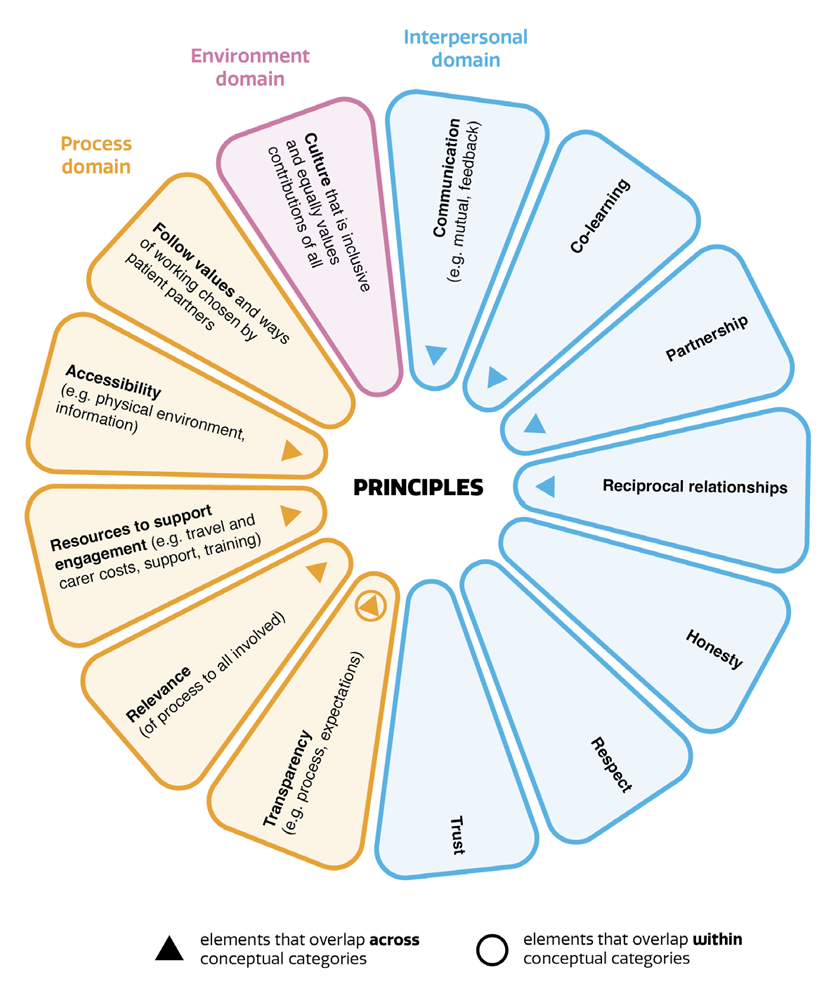
Study aims: To count and describe the elements that overlap and diverge between models and frameworks of patient engagement in health services research. Our specific research question was ‘what are the elements that underlie models and frameworks of patient engagement in health services research?’
What we did: We conducted a scoping review of six electronic databases. We included published and unpublished literature that presented (a) models or frameworks (b) of patient engagement (c) in health services research.
What we found: We included 14 models and frameworks. These models and frameworks had 18 overlapping and 57 diverging elements, that were organized into six conceptual categories (ie, principles, foundational components, contexts, actions, levels and outcomes) and spanned intrapersonal, interpersonal, process, environmental, and health systems and outcomes domains. Because there is little overlap between models and frameworks, researchers should consider the ‘fit’ of each element, by conceptual category and domain, within the context of their study.
Patient Engagement in Scoping Reviews
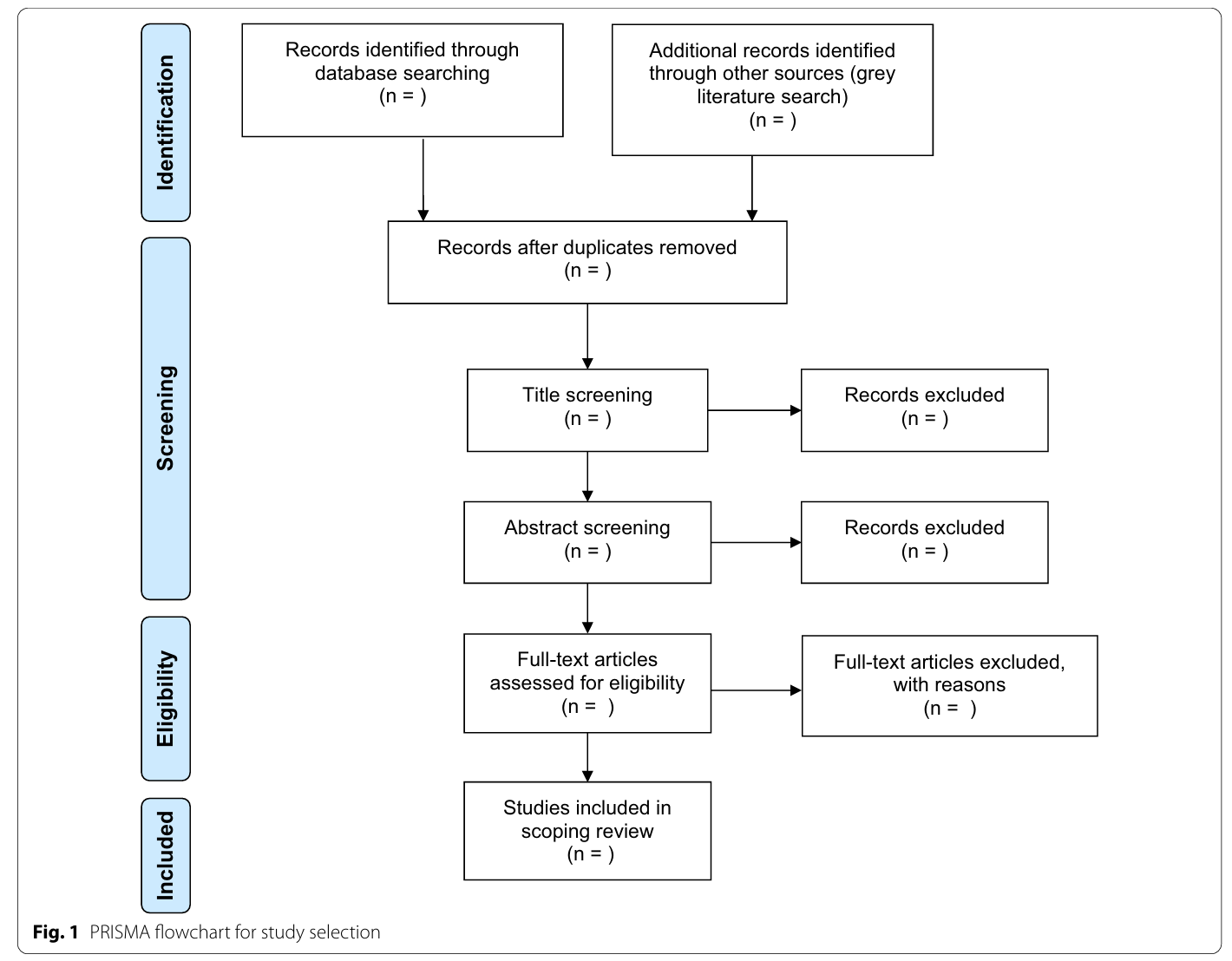
Article full title: Protocol for a scoping review to map patient engagement in scoping reviews
Study aims: To describe the protocol of a scoping review which will examine how patients and caregivers have been engaged as part of past scoping reviews, and inform the development of a unifying methodology.
What we did: We have developed a protocol for a scoping review of methods used to engage patients and caregivers in scoping reviews of health research. Two patients will be engaged as collaborators throughout this review. We will also consult with patients, caregivers, and researchers upon completion of preliminary analyses.
Expected outcomes: We anticipate that our scoping review will provide guidance for researchers seeking to involve health care stakeholders as co-producers of scoping reviews.