
Patient and Caregiver Priorities in Cardiac Surgery Outcomes
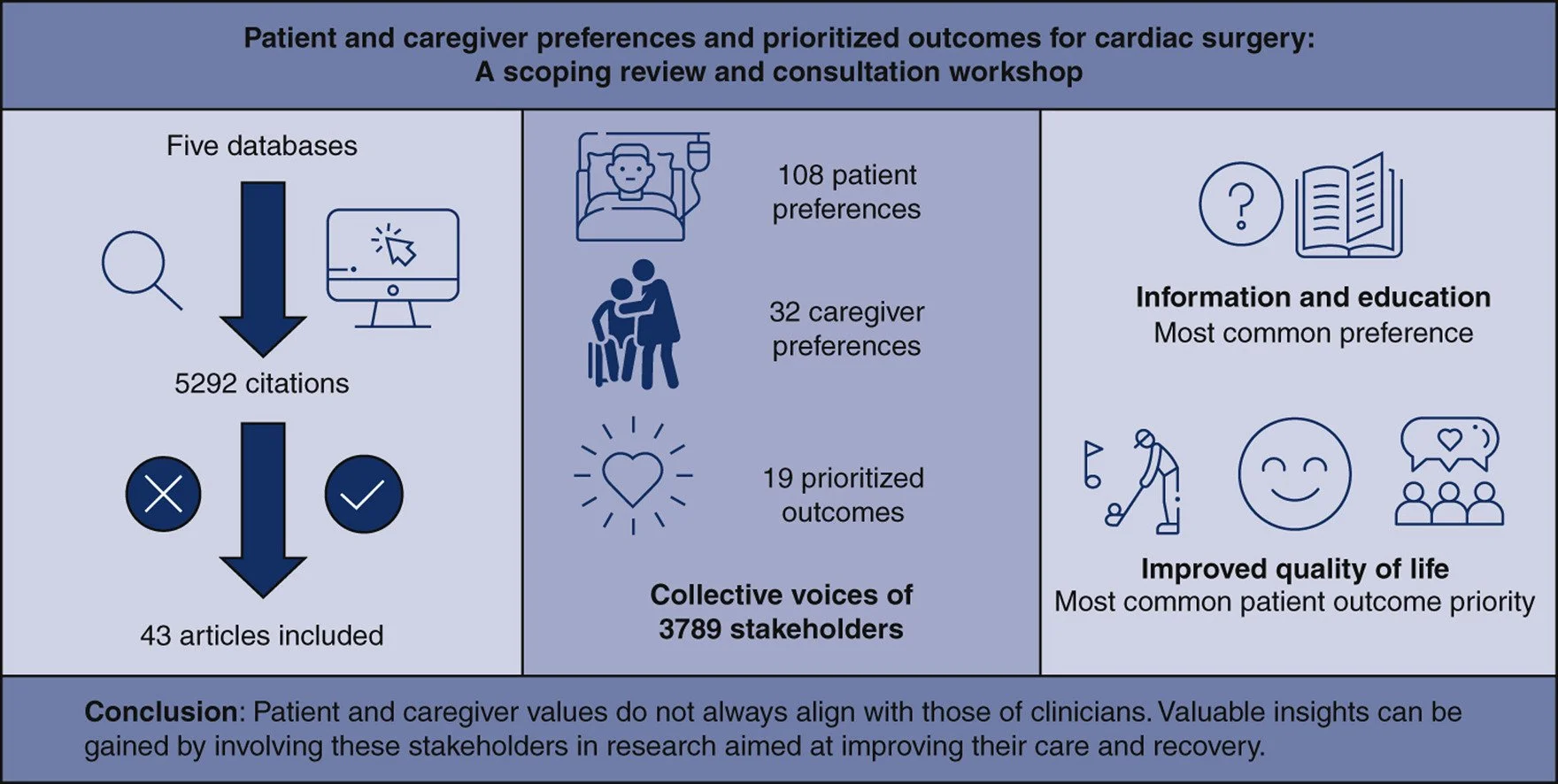
Article full title: Patient and caregiver preferences and prioritized outcomes for cardiac surgery: a scoping review and consultation workshop
Study aims: to identify patient and caregiver preferences and prioritized outcomes related to peri-operative care in cardiac surgery and its lifelong impact.
What we did: We conducted a scoping review of five electronic databases. We included 43 studies that investigated patient or caregiver preferences and prioritized outcomes. Findings were summarized using descriptive statistics and a thematic analysis. Ten patients and seven caregivers were involved in a consultation workshop to validate or add to the findings.
What we found: Based on the collective preferences of 3772 patients and caregivers from the review and 17 from the consultation workshop, a total of 108 patient preferences, 32 caregiver preferences, and 19 prioritized outcomes were identified. Patient and caregiver preferences overlap with the current recommended strategies to reduce risk and improve recovery among cardiac surgery patients.
Putting Patient Value First in Cardiac Surgery Care
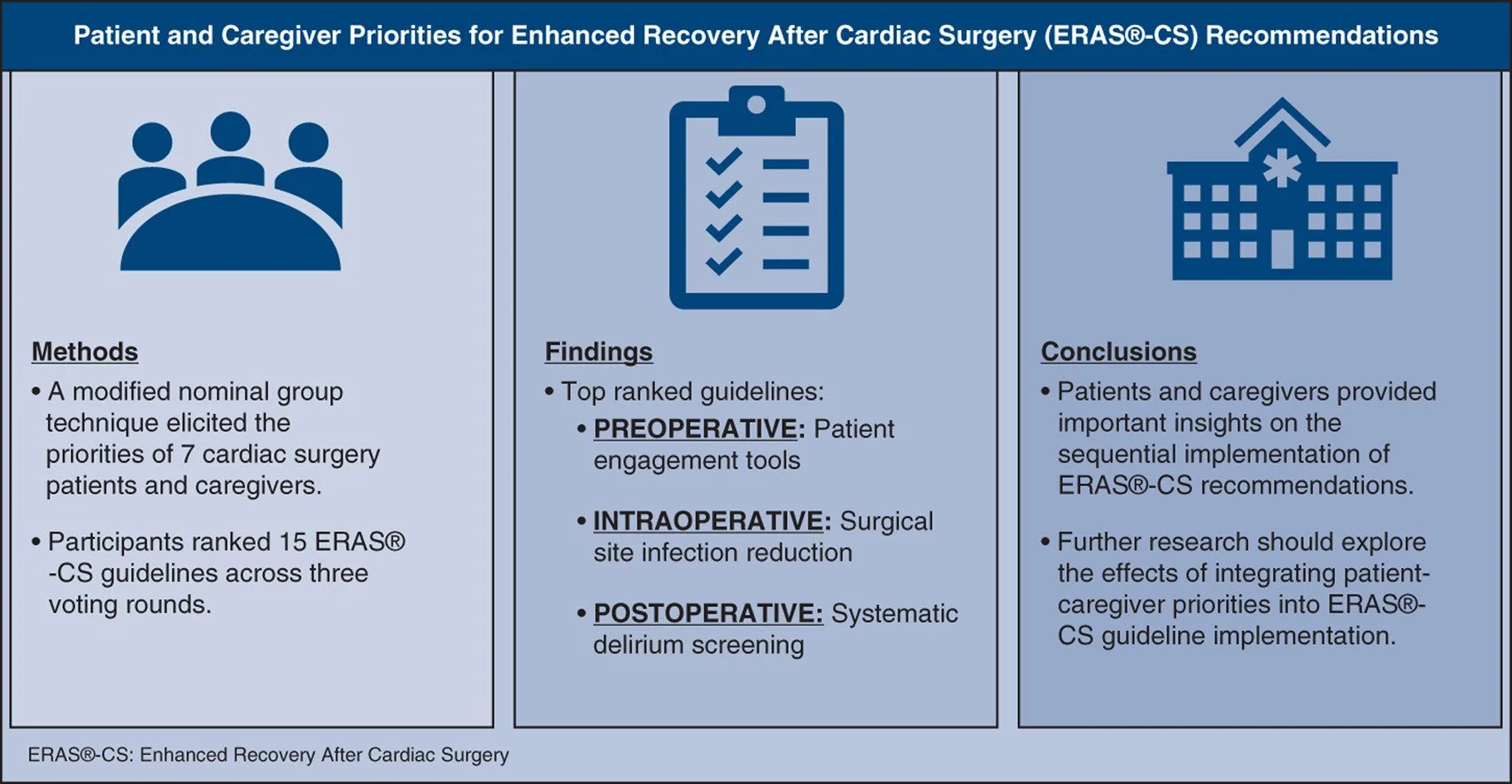
Article full title: Putting patient value first: Using a modified nominal group technique for the implementation of enhanced recovery after cardiac surgery recommendations
Study aims: To explore, from a patient and caregiver perspective, the priority of implementing the Enhanced Recovery After Cardiac Surgery (ERAS-CS) guidelines to optimize the care of patients undergoing cardiac surgery.
What we did: Five patients who had undergone cardiac surgery and two caregivers ranked ERAS-CS recommendations within 3 time points (pre-operative, intra-operative, and post-operative) and across 2 to 3 voting rounds. Final round rankings were used to determine relative priorities.
What we found: Patient engagement tools, surgical site infection reduction, and postoperative systematic delirium screening were the top-ranked ERAS-CS recommendations in the pre-operative, intra-operative, and post-operative time points, respectively. Exploring patient and caregiver priorities may provide important insights to guide the healthcare team with developing and implementing clinical pathways.

Patient Engagement in Mobile Health App Design for Cardiac Surgery
Article full title: Patient Engagement in the Design of a Mobile Health App That Supports Enhanced Recovery Protocols for Cardiac Surgery: Development Study
Key concept:
Mobile health technology: Health-related apps, tools, or support delivered through mobile devices such as smartphones or tablets.
Study aims: To better understand how involving patients and caregivers in the design process could help improve a mobile health technology (app) designed to support recovery after cardiac surgery.
What we did: We worked with an advisory panel made up of patients and caregivers of patients who had undergone cardiac surgery at our research hospital. Through a series of discussions, advisory panel members shared their ideas about what information, features, and supports would be most helpful during recovery after surgery. The research team reviewed these discussions to identify common priorities and recommendations.
What we found: Patients and caregivers highlighted the importance of clear, easy-to-use features and information within the mobile health technology. They identified needs such as recovery tracking, reminders, and accessible information about physical activity, medications, symptoms, and recovery expectations after surgery. Their feedback directly shaped the design of the tool wherever possible within the limits of the technology platform. Overall, involving patients and caregivers helped ensure the tool better reflected real-world recovery experiences and user needs.
Patient Experience With a Cardiac Surgery Mobile App
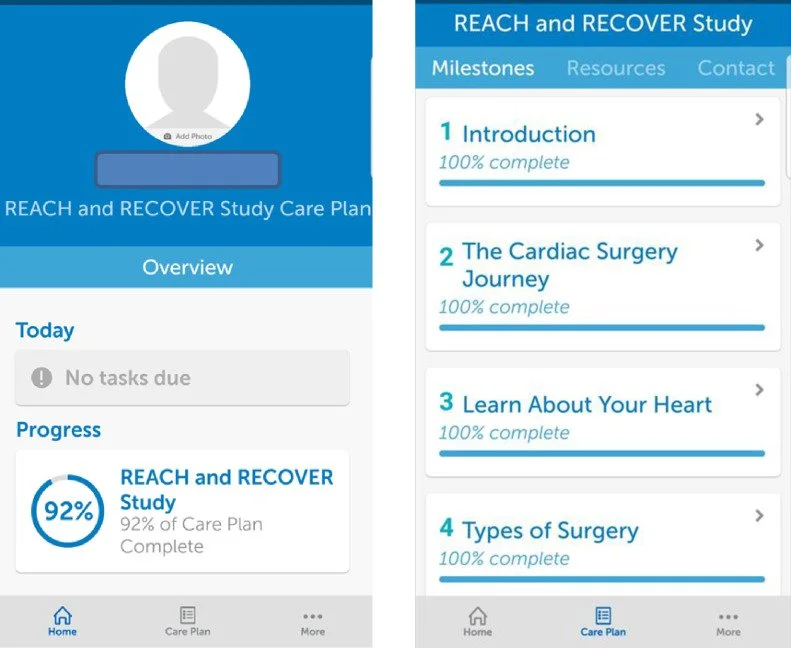
Article full title: Use of a mobile health application by adult non-congenital cardiac surgery patients: a feasibility study
Study aims: To evaluate the feasibility (compliance, usability and user satisfaction) of a mobile health app for delivering Enhanced Recovery Protocols to cardiac surgery patients peri-operatively.
What we did: Sixty-five cardiac surgery patients were given access to the app and completed system usability, satisfaction, and quality of life surveys before and after their cardiac surgery.
What we found: Mobile health technology is feasible for peri-operative cardiac surgery patient education, including older adult patients. The majority of patients were satisfied with the app and would recommend using it over the use of printed materials.